
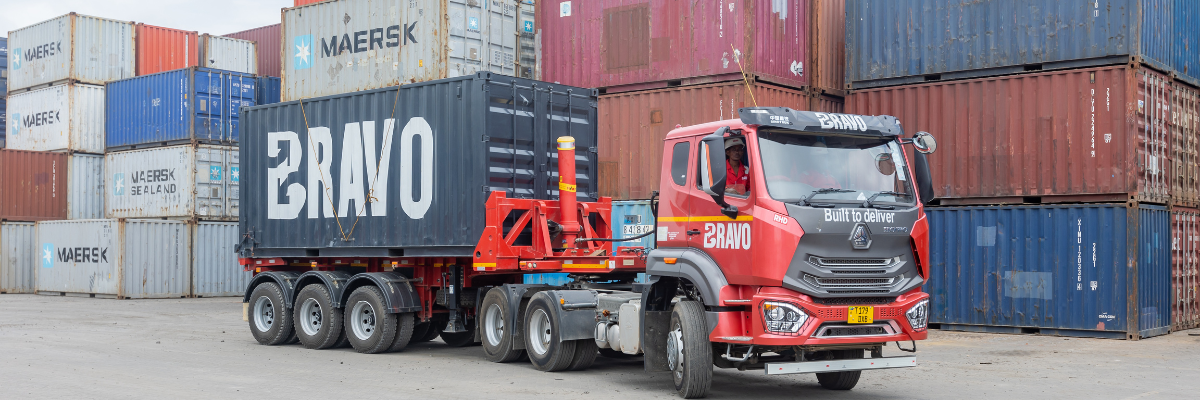
Inland container depot services in Tanzania
Import and transit cargo handling, storage, clearance, and inland delivery
Bravo Logistics provides inland container depot services in Tanzania that help businesses move import and transit cargo away from the pressure of the seaport and into a more controlled inland environment. An inland container depot, or ICD, functions as a dry port and an extension of the main port, allowing cargo to be transferred inland for storage, customs clearance, handling, unpacking, and onward delivery.
This gives importers, distributors, manufacturers, and regional cargo operators more flexibility in how cargo is managed after it leaves the port. Instead of keeping every movement tied to port timelines, Bravo Logistics helps clients improve inland cargo planning through structured container handling, storage, staging, and onward transport. Our ICD services work closely with wider transport and freight solutions, warehousing services, and cross-border logistics to support better cargo flow across Tanzania and into neighboring markets.
Ready to improve inland cargo control? Book an inland depot consultation today.
What is an inland container depot?
An inland container depot is a dry port located away from the seaport that supports the handling of import and transit cargo after it has moved inland from the port. It serves as an extension of the main port, giving businesses more room and flexibility to store cargo, complete clearance procedures, unpack containers where necessary, and coordinate onward delivery.
In Bravo Logistics’ operating context, the ICD is designed for cargo that has already arrived through the port and now needs to be managed more efficiently inland. This is why the ICD should be understood as an inland control point for import and transit cargo rather than an export preparation facility.
How Bravo Logistics’ ICD supports inland cargo operations
Bravo Logistics helps clients move containers from the port to an inland depot where cargo can be handled in a more structured and commercially practical way. This reduces pressure on port operations and gives businesses stronger control over release timing, storage, unpacking, and onward cargo planning.
For many businesses, this creates a more flexible model than relying entirely on port-side handling. Cargo can be transferred inland, staged in a controlled warehouse environment, managed according to operational priorities, and then moved onward by road, rail, storage, or final delivery. This makes the ICD especially useful for companies handling imports into Tanzania and transit cargo bound for landlocked countries such as the DRC and other markets in the region.
Our ICD services also complement related operations such as freight forwarding services, sea freight operations, and warehousing services.
Our inland container depot services
Port to ICD transfer planning
We coordinate the movement of containers from the port to inland handling points so cargo can be positioned away from congested port zones and managed with better control inland.
Cargo handling and staging
Once cargo arrives at the depot, we support container handling, staging, sequencing, and operational coordination to keep inland movement more structured and predictable.
Storage in a controlled warehouse environment
Our ICD model supports storage in a controlled inland environment where cargo can remain secure while clients plan customs clearance, unpacking, onward transport, or final delivery.
Customs clearance support
Bravo Logistics helps align inland operations with customs and process requirements so cargo can be cleared and released more efficiently after transfer from the port.
Unpacking and cargo management
Where required, containers can be unpacked and cargo managed inland instead of under port pressure. This gives clients more flexibility in storage, handling, and overall cargo control.
Onward movement and delivery coordination
After handling and clearance, we coordinate the next stage of transport based on client needs, whether that involves inland delivery within Tanzania or regional onward movement through our cross-border logistics network.
Why businesses use inland container depot services
Businesses use inland container depot services because an ICD creates more flexibility than a port-only model. By moving cargo inland, companies can reduce pressure linked to port timelines, create more room for planning, and manage cargo in an environment that is better suited to controlled handling and storage.
A major advantage of the ICD model is that it often allows more flexible and customised free-day arrangements than the port. This helps clients manage storage costs more effectively and avoid unnecessary pressure linked to port-side timing. It also gives businesses more flexibility in unpacking, storing, sequencing, and managing cargo within a controlled warehouse setting.
For companies handling import and transit cargo, this improves inland visibility, supports stronger scheduling, and allows onward movement decisions to be made with more confidence and less operational disruption.
What changes when ICD services are properly used
Before working with Bravo Logistics
- Cargo remains too closely tied to port release schedules.
- Storage pressure builds quickly.
- Unpacking and inland coordination become harder to manage.
- Teams spend too much time reacting to delays and timing issues.
After working with Bravo Logistics
- Cargo is positioned inland with more flexibility.
- Storage, clearance, and unpacking become easier to coordinate.
- Businesses gain more control over release timing and onward movement.
- Import and transit cargo flow becomes more structured and predictable.
The Bravo Logistics ICD process
Cargo and container assessment
We begin by reviewing container profiles, inland destinations, timing requirements, and operational priorities so inland planning starts with a clear understanding of the cargo flow.
Transfer from port to ICD
We coordinate container movement from the port to the inland depot so cargo can be managed in a more flexible inland environment.
Depot handling, storage, and unpacking
At the depot, cargo is staged, stored, and handled according to operational requirements. Where needed, containers can be unpacked and cargo managed within the warehouse environment.
Documentation and clearance coordination
We support process alignment and inland coordination so customs clearance and release can continue with fewer avoidable interruptions.
Release and onward movement
Once cargo is ready, we coordinate the next stage of inland movement, whether by transport and freight, warehousing, or regional delivery through cross-border logistics.
Key advantages of using Bravo Logistics’ ICD
More flexible free-day arrangements
Compared with port handling alone, the ICD model can provide more room to manage free days and storage timing in a way that better fits operational needs.
Better control over storage costs
With improved inland flexibility, businesses can manage dwell time and storage-related cost pressure more effectively.
Greater cargo handling flexibility
Cargo can be unpacked, stored, staged, and managed in a controlled inland environment instead of under tighter port-side pressure.
Stronger support for transit cargo
The ICD is especially valuable for cargo moving beyond Tanzania into regional inland markets such as the DRC and other neighboring countries.
Better inland visibility and planning
Businesses gain stronger oversight of container movement beyond the port and can make onward movement decisions with greater confidence.
Industries we support
Bravo Logistics supports businesses across manufacturing, mining, retail, trade, and regional transit cargo operations. Our ICD services are especially relevant where inland timing, cargo control, and structured handling play an important role in wider supply chain performance.
For manufacturers, the ICD supports raw materials, machinery, components, and finished goods moving inland from the port. For mining and industrial operations, it helps position cargo closer to operational sites. For trade and regional distribution, it supports import and transit cargo that needs to move through Tanzania and onward into inland regional markets.
Why Bravo Logistics
Bravo Logistics brings together more than 20 years of experience in logistics and inland cargo planning. Our ICD services are built to reduce pressure on port operations, improve inland cargo control, and help businesses manage container flow in a more practical and flexible way.
We understand that import and transit cargo often needs more than direct port-to-destination movement. It needs room for storage, clearance, unpacking, staging, and better inland coordination. That is why our inland container depot model is designed to support stronger cargo control beyond the seaport.
If your business is handling export cargo before port dispatch, you may also benefit from our container freight station services, which are structured differently from ICD operations.
Frequently asked questions
What is an inland container depot?
An inland container depot is a dry port located away from the seaport that supports the handling of import and transit cargo, including storage, staging, customs clearance, unpacking, and onward movement.
Does an ICD handle export cargo?
No. In Bravo Logistics’ operating context, the ICD is used for import and transit cargo only. Export cargo is handled differently and is better supported through our container freight station services.
Why would a business use an ICD instead of relying only on the port?
An ICD gives businesses more flexibility over storage, unpacking, clearance, and inland movement. It also helps reduce pressure linked to port timelines and can support more customised free-day arrangements.
Can Bravo Logistics support onward delivery from the ICD?
Yes. Bravo Logistics can connect ICD operations with transport and freight solutions, warehousing services, and cross-border logistics based on cargo needs.
Is the ICD useful for transit cargo?
Yes. The ICD is especially useful for transit cargo moving from the port through Tanzania and onward to neighboring landlocked countries such as the DRC.
Conclusion
Bravo Logistics helps businesses reduce pressure on port operations and manage import and transit cargo with more flexibility through inland container depot services in Tanzania. From container transfer and inland storage to customs clearance, unpacking, and onward delivery, our ICD model gives clients stronger control over how cargo moves beyond the port.